Tag
South Ossetia

South Ossetian presidential election 2026

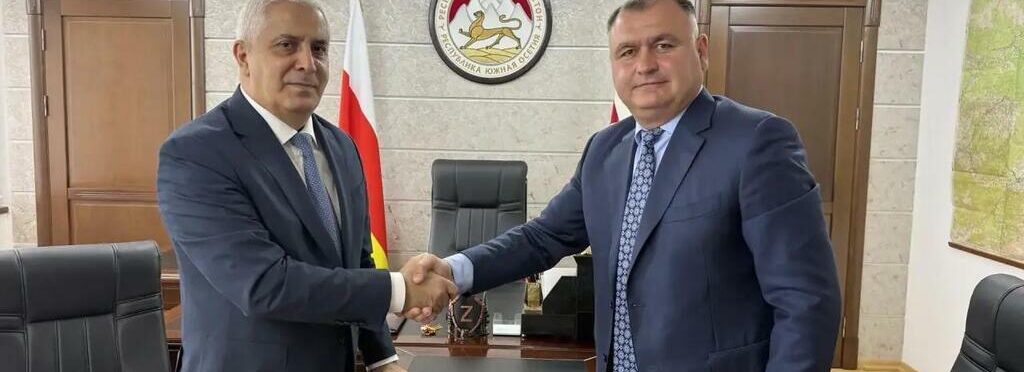
Russian occupied separatist South Ossetia of Georgia scheduled snap elections for the so-called presidency on 18 September 2026. Incumbent Alan Gagloyev became advisor to Russian president Putin, triggering the election. Correspondingly, the developments unfolded according to a traditional Kremlin-playbook scenario of a managed transfer of power.

Background

On 9 May 2026 Russia and the separatist government of South Ossetia signed a “Treaty on Deepening Allied Cooperation”, a successor to the integration pact of 2015. The treaty aims for further economic integration, especially in the energy, transport, and telecommunications sectors. At the same time it strives to converge legislation, expanding cooperation in education, culture, and health. This was not much new and a continuation of standing practice as result of the 2015 treaty.1Jamestown Foundation, Mamie Powers, 26 June 2026, South Ossetia and Russia Make Further Steps Toward Annexation

A focal point of attention was that the treaty allows Russian citizens  to hold official (political) positions at the so-called “state and municipal” level in South Ossetia. This enables the Kremlin to place its officials in the South Ossetian government.

Separatist president Alan Gagloyev said the treaty “will be the beginning of the [re]unification of the Ossetian people”.  Successive separatist governments frequently expressed the desire to merge with the autonomous republic of North Ossetia in Russia, joining the Russian Federation. A few days after Russian president Putin ratified the treaty,2RES Agency, 25 May 2026, Владимир Путин подписал закон о ратификации договора с Южной Осетией Gagloyev appointed Marat Kambolov as his advisor to oversee the implementation of the treaty. 3RES Agency, 27 May 2026, Марат Камболов назначен государственным советником президента Южной Осетии As a Russian Ossete, Kambolov had no direct ties with South Ossetia and served Russian institutions for decades.

Grooming leadership

Analysts widely anticipated the Kremlin wanted to replace Gagloyev, whose term was set to expire in 2027, with Kambolov.4Radio Tavisupleba (RFE/RL), 28 May 2026, ვინ არის მარატ კამბოლოვი, რომელსაც კრემლში გაგლოევის სავარაუდო შემცვლელად განიხილავენ? (Who is Marat Kambolov, who is being considered as a possible replacement for Gagloev in the Kremlin?) As Russian citizen lacking a South Ossetian “citizenship”, Kambolov is eligible to hold official positions under the new treaty.

The corrupte and clan-based politics in South Ossetia dissatisfied the Kremlim. There was also a lack of economic performance. Consequently, installing an outsider for the proxy-leadership was a logic step to tighten control. Russia’s impatience became clear with the resignation and dismissal of the government of South Ossetia on 8 June 2026. This sped up the process of grooming Kambolov for the leadership.5Radio Tavisupleba (RFE/RL), 8 June 2026, ოკუპირებული ცხინვალის “პრემიერად” გაგლოევი მარატ კამბოლოვს წარადგენს – მას კრემლში გაგლოევის სავარაუდო შემცვლელად განიხილავენ

Gagloyev picked Kambolov the same day to lead the new government as prime minister. Without delay, the South Ossetian parliament agreed to this a week later. In his inaugural speech Kambolov emphasized the need for South Ossetians to unite.6RES Agency, 16 June 2026, Парламент Южной Осетии единогласно одобрил кандидатуру Марата Камболова на должность председателя правительства The appointment was a violation of South Ossetia’s own constitution. It stipulates that candidates for prime minister should have lived in South Ossetia continuously for 10 years. Kambolov did not qualify this criterium, as he never lived in South Ossetia until his appointment as advisor on 25 May 2026.7OC Media, 16 June 2026, North Ossetian Marat Kambolov appointed South Ossetian Prime Minister

Take-over

On 23 June 2026 Gagloyev resigned as president. He became advisor to Russian president Vladimir Putin to facilitate the implementation of the Russo-South Ossetian treaty. Putin offered him the job a day prior.8OC Media, 23 June 2026, South Ossetian President Alan Gagloev resigns9RES Agency, 23 June 2026, Владимир Путин назначил Алана Гаглоева своим советником: что известно (Vladimir Putin appointed Alan Gagloyev as his adviser: what is known)

Gagloyev said the treaty “will help the Ossetian people become united again”. According to him “it will be an important step towards the reunification of South and North Ossetia”. To merge with the autonomous republic of North Ossetia in Russia, and thus joining the Russian Federation. He added, “today, our task is to make our cherished dream come true—to overcome the fate of a divided people and reunite with North Ossetia, to reunite with Greater Russia”. The emphasis on re-union by Gagloyev is a historic falsehood, as both territories have never been one (administrative) entity.

Gagloyev’s transfer to Moscow promoted Kambolov to the “head of state” as acting president, in line with the constitution. In line with the constitution, the elections should take place within 90 days of the early resignation. The South Ossetian parliament agreed on 1 July 2026 to set the date for 18 September 2026.10Civil Georgia, 2 July 2026, ‘Presidential Vote’ Set for September 18 in Occupied Tskhinvali11RES Agency, 2 July 2026, The South Ossetian Parliament has set a date for early presidential elections

Candidates

The election code requires candidates to have resided permanently in South Ossetia for ten years prior to the election. This did not prevent Marat Kambolov to get nominated by workers of the BTK-4 factory and registered as candidate.12RES Agency, 3 July 2026, Kambolov has become the first candidate for the post of President of South Ossetia

In subsequent days his candidacy was endorsed by Gagloyev’s Nykhas party,13RES Agency, 6 July 2026, Партия «Ныхас» поддержала кандидатуру Марата Камболова на выборах президента Южной Осетии (Nykhas Party supported Marat Kambolov’s candidacy in the South Ossetian presidential elections) the United Ossetia party of former president Bibilov,14RES Agency, 6 July 2026, «Единая Осетия» поддержит Марата Камболова на выборах президента Южной Осетии (United Ossetia will support Marat Kambolov in South Ossetian presidential elections) and the Communist Party.15RES Agency, 6 July 2026, Компартия войдет в инициативную группу по выдвижению Марата Камболова кандидатом в президенты Южной Осетии (The Communist Party will join the initiative group to nominate Marat Kambolov as a candidate for president of South Ossetia) These are three out of four parties in the parliament.

This ensured an orchestrated outcome, having all major political stakeholders endorsing Kambolov, with no other prominent figures in sight. Consequently, the Kremlin ensured no viable competition appeared on the scene. In 2022 the presidential election was quite close between incumbent Bibilov and his Kremlin backed opponent Gagloyev.

References and footnotes

Borderization and territorial claims South Ossetia

Borderization refers to the construction of physical barriers to transform a territorial ceasefire line into an international border.”

While there are various ways to implement so called borderization, this page focuses on the construction by South Ossetian and Russian forces of physical barriers along the ABL of South Ossetia. Such as fences, barbed wire, border signs and other markings in the landscape outside of the crossing points.

Jump to archive pages for 2020, 2019, 2018 or 2017. Note: the Chorchana – Tsnelisi territorial conflict and borderization at that location can be found in its own page

Continue reading Borderization and territorial claims South Ossetia

Abduction, arrest and detention near occupation line South Ossetia

Georgian civilians living around the occupation line (sometimes referred to as Administrative Boundary Line) of South Ossetia frequently experience arrest, abduction and detention by Russian or South Ossetian “border guards” for alleged violation and trespassing of the “border”.

This page keeps track of the latest developments of such arrests. Archived years can be found  in the left sidebar. While having mapped incidents since 2014, the blogged chronology is currently only available from 2017 onwards. 

Continue reading Abduction, arrest and detention near occupation line South Ossetia

[2020 archive] Arrests near ABL South Ossetia

Georgian civilians living around the Administrative Boundary Line frequently experience arrests, abduction and detention by Russian or South Ossetian “border guards” for alleged violation and trespassing of the “border”.

This is the archived 2020 page, click here for the current running year

Continue reading [2020 archive] Arrests near ABL South Ossetia

[2020 archive] Borderization South Ossetia

Borderization refers to the construction of physical barriers to transform a territorial ceasefire line into an international border.”

While there are various ways to implement so called borderization, this page focuses on the construction by South Ossetian and Russian forces of physical barriers along the ABL of South Ossetia. Such as fences, barbed wire, border signs and other markings in the landscape outside of the crossing points.

This is the archived 2020 page, click here for the current running year, or jump to 2019, 2018 or 2017. Note: the Chorchana – Tsnelisi territorial conflict and borderization at that location can be found in its own page Continue reading [2020 archive] Borderization South Ossetia

Checkpoint regime South Ossetia

The de facto authorities of South Ossetia frequently close crossing points towards Tbilisi controlled territory for a variety of reasons. In every instance it directly hinders freedom of movement principles, which is precisely the aim of the closures. “Security reasons” are typically cited, but by far most of the time there is no imminent threat at play.

This page logs developments on crossing point closures (and reopening) to provide insight in scale and impact on humanitarian circumstances such as medical aid and so on. Most recent updates on top.   Continue reading Checkpoint regime South Ossetia

[2019 archive] Arrests near ABL South Ossetia

Georgian civilians living around the Administrative Boundary Line frequently experience arrest, abduction and detention by Russian or South Ossetian “border guards” for alleged violation and trespassing of the “border”.

This is the archived 2019 page, click here for the current running year

Continue reading [2019 archive] Arrests near ABL South Ossetia

Georgian civilians living around the Administrative Boundary Line frequently experience arrest, abduction and detention by Russian or South Ossetian “border guards” for alleged violation and trespassing of the “border”.

This is the archived 2019 page, click here for the current running year

Continue reading [2019 archive] Arrests near ABL South Ossetia

[2019 archive] Borderization South Ossetia

Borderization refers to the construction of physical barriers to transform a territorial ceasefire line into an international border.”

While there are various ways to implement so called borderization, this page focuses on the construction by South Ossetian and Russian forces of physical barriers along the ABL of South Ossetia. Such as fences, barbed wire, border signs and other markings in the landscape outside of the crossing points. 

This is the archived 2019 page, click here for the current running year, or jump to 2020, 2018 or 2017. Note: the Chorchana – Tsnelisi territorial conflict and borderization at that location can be found in its own page. The borderization at Gugutiantkari also has its own page.

Continue reading [2019 archive] Borderization South Ossetia

When recognition is not the aim — Civil.ge

What was Russia’s intention with the recognition of the independence of Georgia’s breakaway regions South Ossetia and Abkhazia in the immediate aftermath of the 2008 war? In a comment on Civil.ge I shed a light on that, and where this recognition is heading. Follow the links below for an English, Georgian or Russian version. 

Russia’s unilateral recognition of the self-declared independence of Abkhazia and South Ossetia regions on the 26th of August 2008, while pointing to the US-led recognition of Kosovo independence earlier in 2008, was not picked up by the international community. After 11 years, only five countries recognize the independence of the two, as opposed to 101 for Kosovo. Where are Abkhazia and South Ossetia heading with their “independence”? […]

Continue reading When recognition is not the aim — Civil.ge

Territorial dispute Chorchana-Tsnelisi over old and “fake” maps

In August 2019 a simmering territorial dispute pushed by South Ossetia revived when Georgian authorities constructed a new police post on Tbilisi administered territory near the South Ossetian controlled village of Tsnelisi (referred to as Uista by the South Ossetian side) . The course of the so-called “border” in the thickly forested area between between Tsnelisi and Georgian controlled Chorchana is disputed by South Ossetia. A few days prior to the renewed conflict, borderization at Gugutiantkari stirred emotions on the Georgian side.

In the past, Tskhinvali has laid a (historic) claim on the area between Tsnelisi and Chorchana, at the southwestern corner of South Ossetia. Since 2019 it has come to an explicit yet non-physical confrontation, with Georgia de facto losing control of roughly 5 square kilometers of territory, for the moment, which roots in a tactical blunder by the Georgian side . A series of incidents, heated rhetoric and Incident Prevention and Response Mechanism (IPRM) meetings were some of the direct and visible elements of the dispute which is still ongoing unresolved into 2025. This page is a chronological overview of developments since August 2019 (last updates at the bottom of the page).

Continue reading Territorial dispute Chorchana-Tsnelisi over old and “fake” maps